Machining
Brandauer’s machining services support the production of accurate, high-quality metal components where tight tolerances and repeatability are essential. Our machining capability complements precision manufacturing workflows, helping deliver reliable parts for demanding applications and production requirements.
Achieve tighter tolerances and faster throughput for standout parts
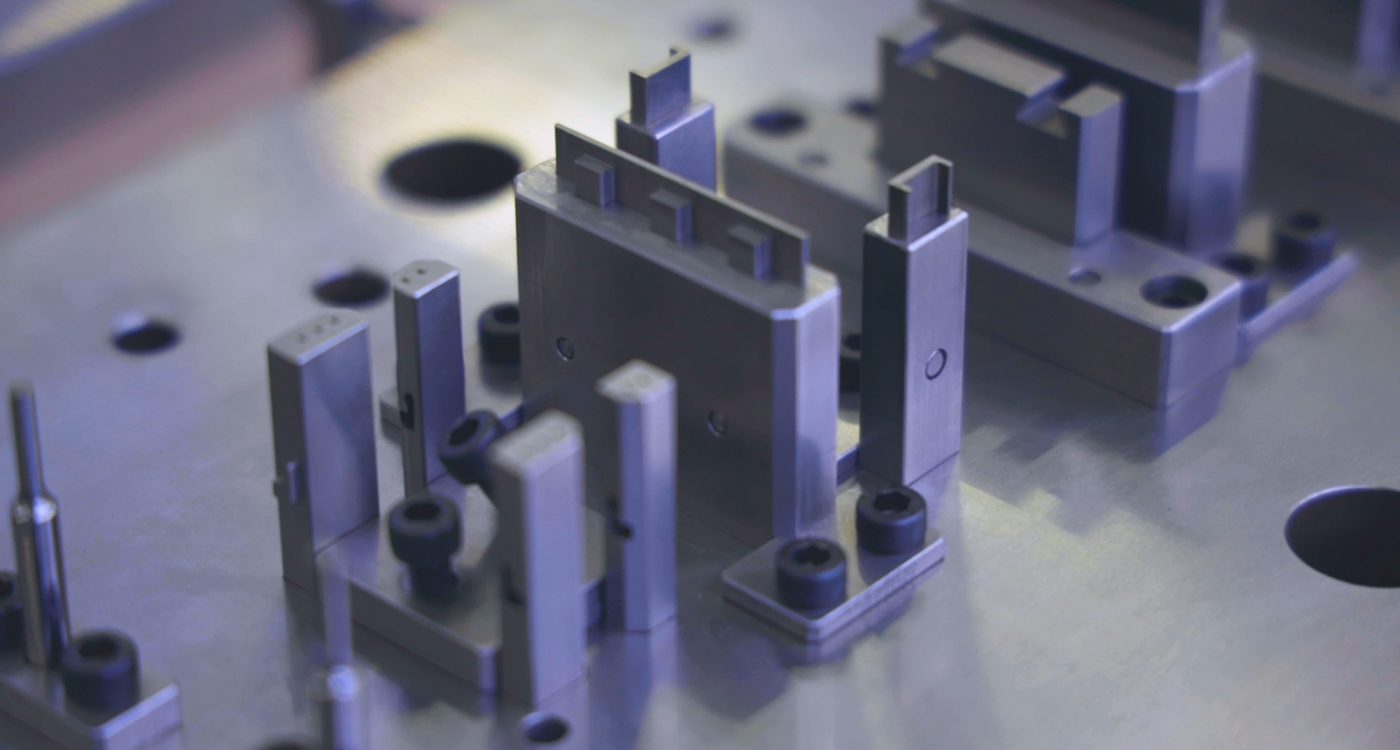
Machining is fundamental in modern manufacturing and one of the most used methods in manufacturing today. This becomes even more true when tolerances become tighter, and precision is the number 1 priority. Brandauer’s machining capabilities are available to support complex, high-tolerance components that cannot be fully produced by fine blanking, stamping or laser cutting alone, a service that has been developed on our ability to support the manufacture of components in Brandauer’s state of the modular precision tools.
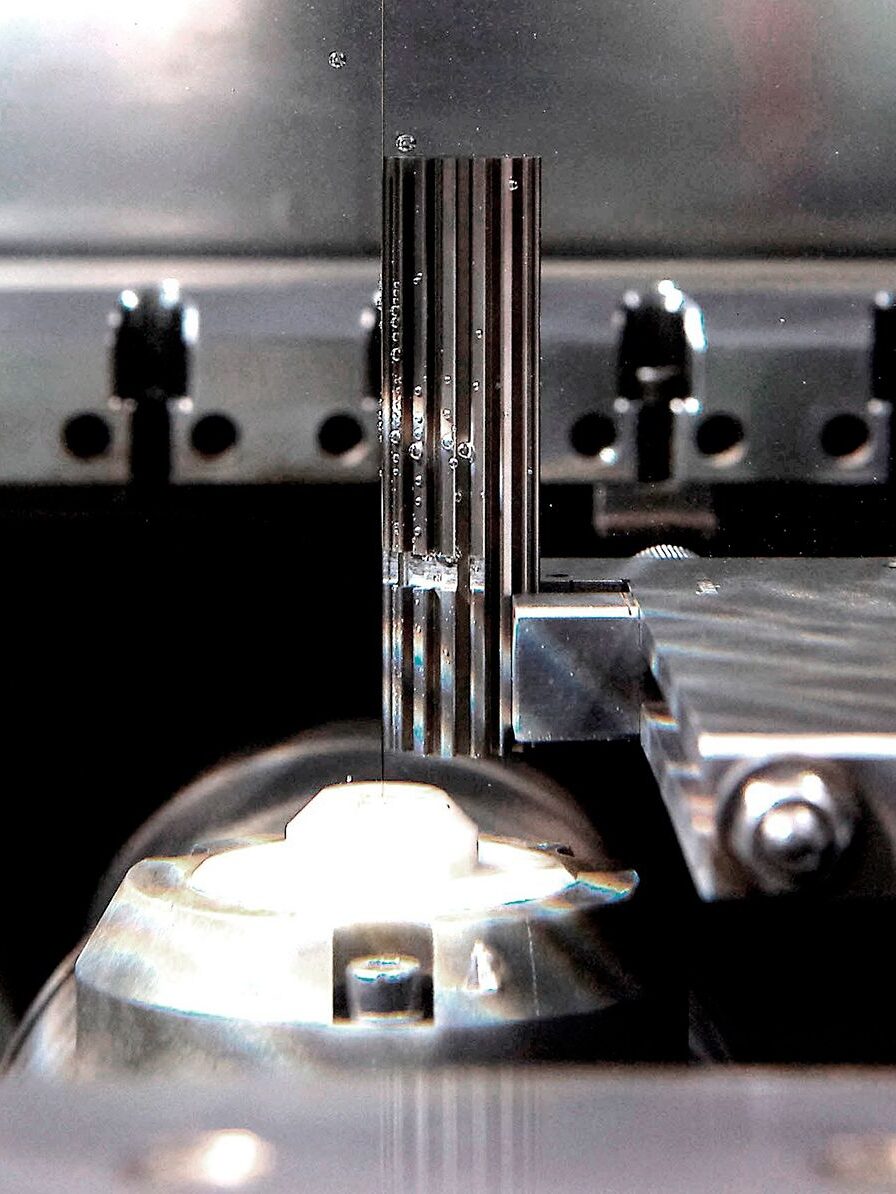
Brandauer’s one-off bespoke machining capability draws from its proven approach to precision press tooling solutions, producing complex progression tools that are capable of manufacturing millions of tight tolerance components every day. Within its wire EDM cell, Brandauer can machine one-off tool parts using wires of diameters greater than 0.1mm with a component accuracy of +/- 1 micron.
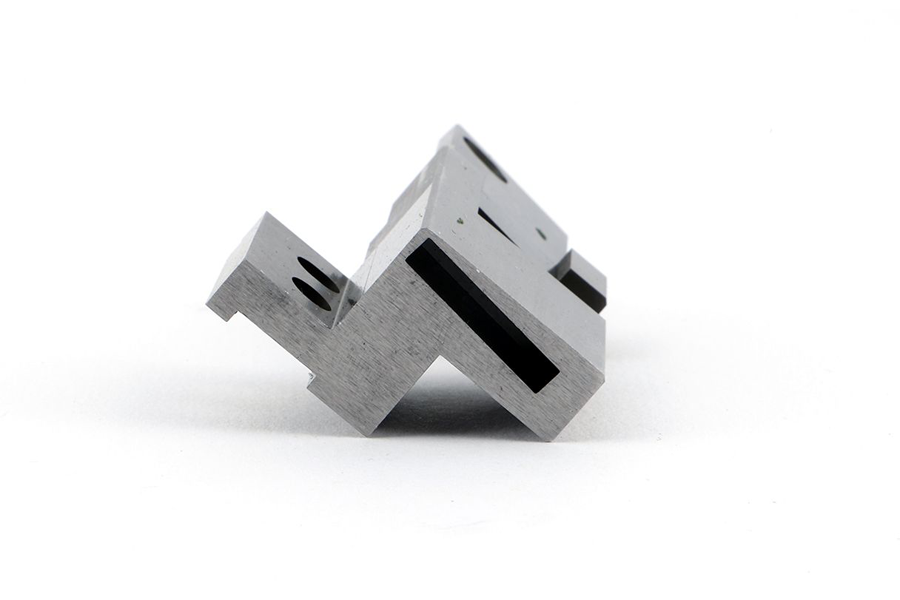
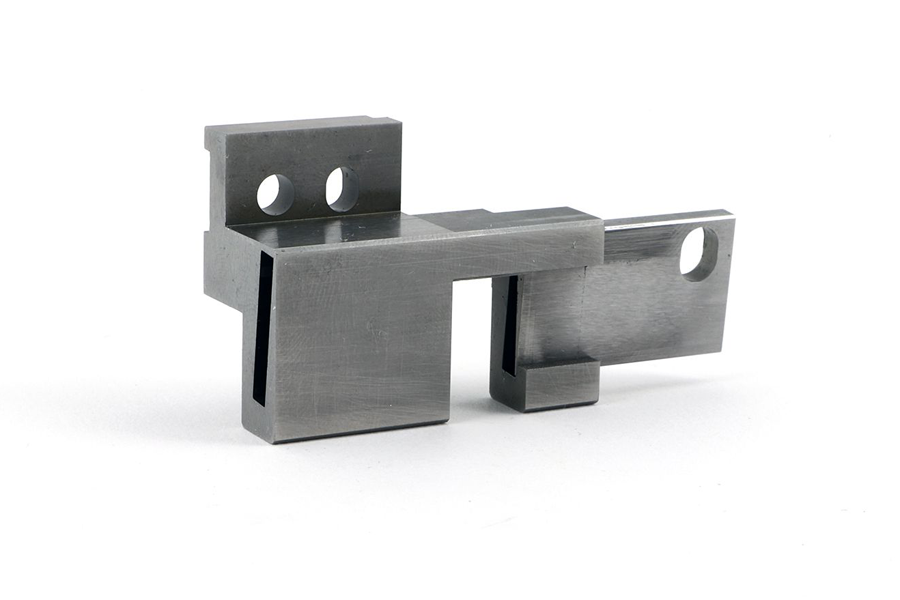
Outside of Brandauer’s WEDM machining capabilities, Brandauer can manufacture components through their wide range of precision machining capabilities, with micron-accurate surface grinding capabilities up to a length of 1m and CNC Milling up to 1m2. Brandauer can further accommodate low-volume CNC turning requirements to exacting specifications.
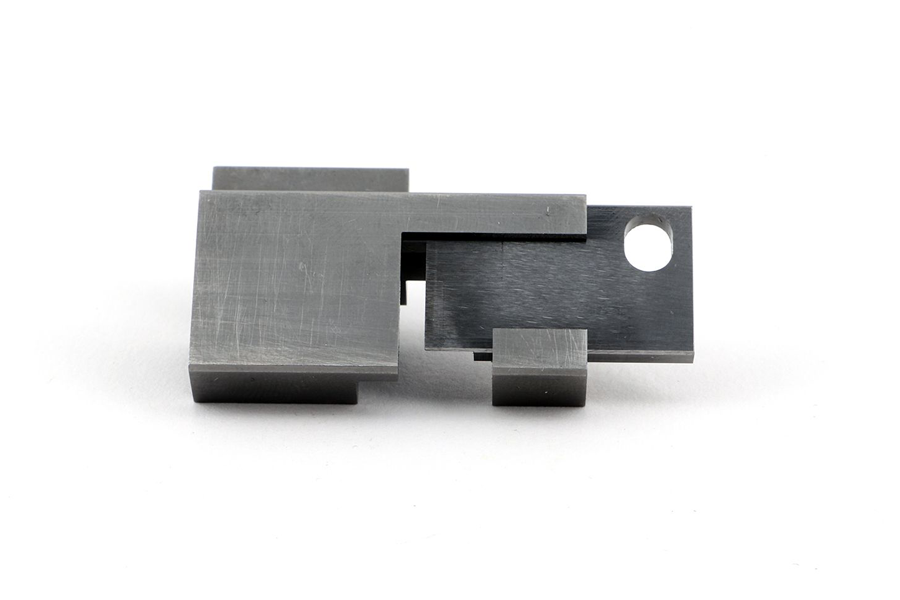
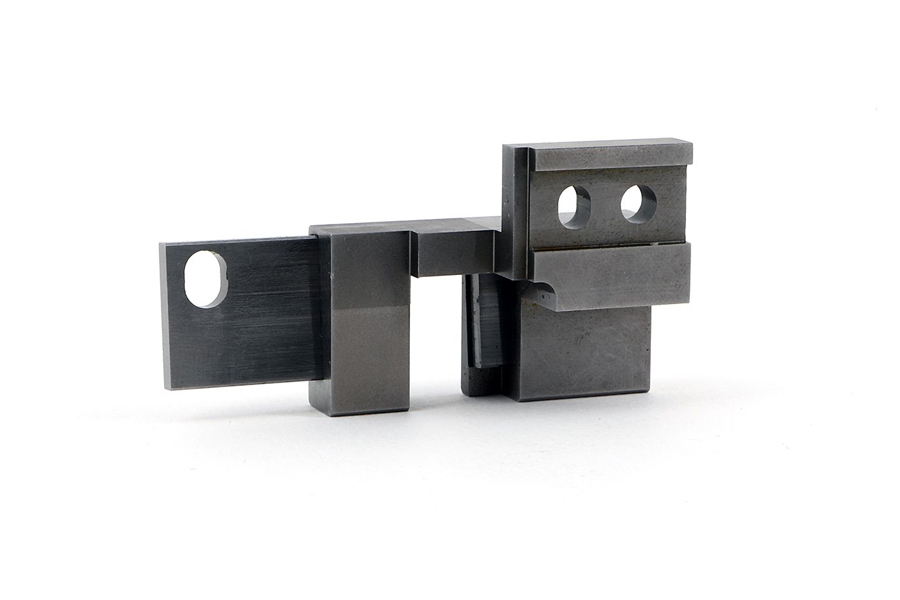
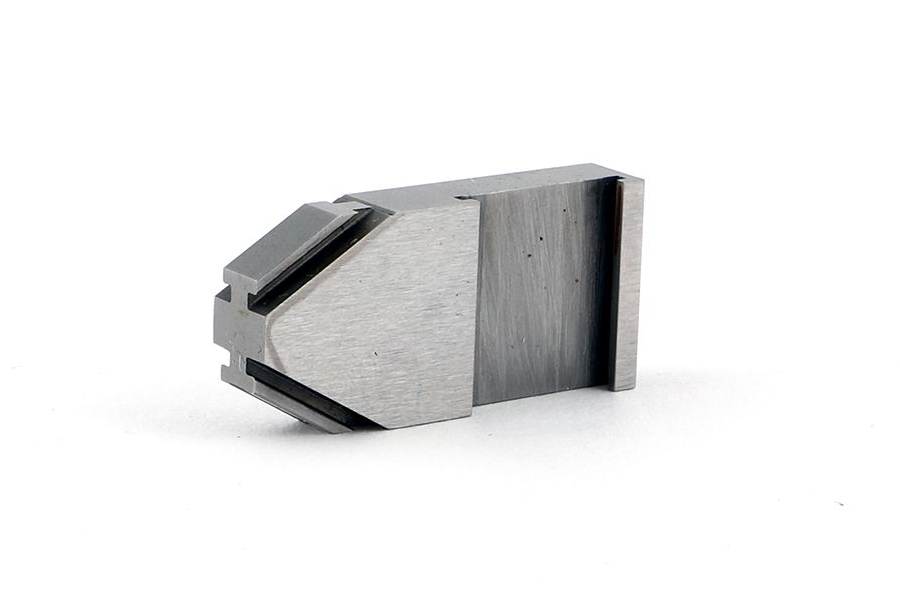
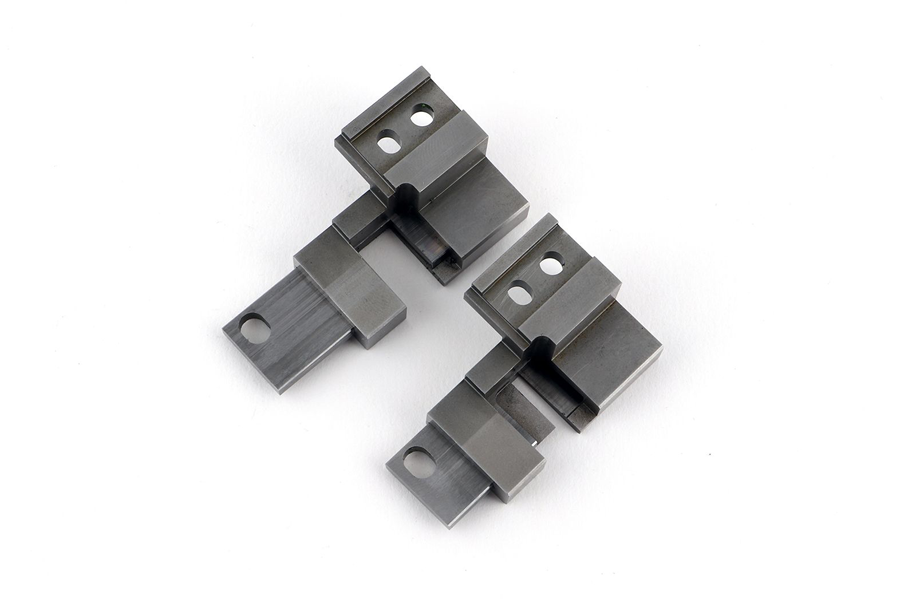
Brandauer’s machining capabilities
Jigs and fixtures
Press and mould tool spares
One-off bespoke machining
Hard metal machining
Plate manufacture
EMD hole burning
Surface grinding up to 1m
OPG grinding
Precision Wire EDM (0.1mm dia. wire, smallest)
Low batch CNC turning
CNC milling up to 1m square
Machining soft vs hard materials
Soft machining
This is when components are machined using materials that are in their “soft” state. Materials in their soft state are materials in their pre-heat-treated state. Metals in this state are “less tough.” Machining soft state materials usually comes at the beginning of processes, when quick, rougher cuts are required as tolerances aren’t as tight. It is standard practice to try to get as much of the machining process as possible in the materials’ soft state, as it is easier, quicker, and more cost-effective to the company and the customer due to the materials’ malleability. After soft machining is complete, the component can then go into a heat treatment process, during which the material then emerges in its “hard state”.
Hard Machining
Once the heat treatment stage is completed, the machined material is now in its “hardened state”. Materials in this state are a lot more wear-resistant but are also more brittle. Whilst machining in their soft state is easy to cut and manipulate, it becomes a lot harder to cut material in its hardened state. It is, however, very important in a lot of processes to machine components out of hardened material. This is because during the heat treatment process, manipulations occur to the raw material, which could leave micron-level differences in the components’ shape and geometry, and when working to Brandauer tolerances, this can prove detrimental to the final use case.
To bring this into Brandauer’s world. When manufacturing tools in-house, Brandauer uses both soft & hard machining throughout the process. For tooling plates and the larger pieces, the tolerances for this are less tight, and the material is easier to manipulate. We then send the material off to be heat-treated into its “hardened” state.
Brandauer then machines all the small, high-accuracy components through WEDM methods with the material in its hardened state. When materials go through the heat treatment process, the material “moves” due to internal stresses during the heating and cooling processes, and whilst these shifts can only be between 10-30 microns, this makes all the difference. Brandauer consistently works to tolerances of 10-20 microns, so even the smallest imperfections in the cutting elements of the tool can have a huge impact on the final component that comes out of the press machine
How does machining work within Brandauer?
For us at Brandauer, machining is fundamental to the business! All of our precision tooling is manufactured using various forms of precision machining. Outside of tooling, we offer all customers the capability to manufacture bespoke components on all our machines! But what does machining actually look like for Brandauer?
Step 1 – Soft machining
All tools begin with the material in their soft state, as mentioned before, this is so we can take larger amounts of material off quickly. “Rough cuts” are made to the material to obtain the core geometry specified for the tool. In this stage, we are machining tool plates, cavities and pockets, mounting features & the start holes ready for WEDM.
One key element before taking heat treatment during the soft machining stage is ensuring the material is not cut to its final sizing. Normally, around 0.1mm (100 microns) extra is left on the whole component. This is to allow for material property changes during the heating and cooling process, which would be taken off at stage 3 (grinding).
Step 2 – Heat Treatment
Now the component is ready to be treated and taken into its “hardened state”. This process works by carefully heating the material to a specific temperature and then cooling it under controlled conditions to alter its internal microstructure. Different materials and tooling applications require different heat treatment methods, but the goal is always the same: to make the material stronger and longer lasting for its final application!
When a component is heat-treated, it’s the microstructure that causes the change in material strength. The steel is heated to a high temperature where carbon atoms become more mobile and dissolve evenly into the structure. When it is then rapidly cooled, they do not have enough time to return to their original arrangement. Instead, they become trapped in a highly strained and tightly packed structure.
Once this is completed, the components can move on to secondary operations and hard machining.
Step 3 – Hard machining (grinding)
For larger components within a tool, grinding is a really important step to ensuring micron accuracy throughout the component.
As mentioned in step 1, a 0.1mm layer has been left on the tool to allow for changes in geometry during heat treatment. The grinding stage is where this layer gets taken off, and the larger tool components are taken down to their final geometries. This gives the tool a perfect surface finish and helps protect the tool from excessive wear. When stamping millions of components every month, the tool is exposed to constant friction and stress from the material and press machine, so ensuring structural integrity is of huge importance at the manufacturing stage. Even the smallest amount of surface imperfections can cause the final metal components to have poor dimensional accuracy, burrs/defects, reduced lifespan, and ultimately increased downtime when something does go wrong with the tool.
By implementing grinding and other finishing processes. We take out these issues at the beginning of the process.
Step 4 – Hard machining (WEDM)
For the smaller components on the tool. They need to be machined out of material in its hardened state. If we machined these components in a soft state, those small changes in geometries during the heat treatment processes can be the difference between a functional and non-functional tool.
The other issue that arises is that material in a hardened state becomes extremely brittle, and conventional machining becomes either impossible or very expensive and time-consuming to complete.
WEDM also allows us to manufacture geometries that would be extremely difficult or even impossible to achieve using conventional machining alone. Complex corners, narrow slots, intricate profiles, and carbide tooling can all be produced with exceptional repeatability and accuracy.
Step 5 – Final inspection, assembly and testing
Now all the components are machined and ready, they are inspected in-house by our team, and any potential defects are rectified immediately. They are then taken into our toolroom, which is bespoke for all new tools that come into Brandauer, where a team of experienced toolmakers take these components and builds a finished tool from them!
The tool is then transferred to the shop floor,+ where it is rigorously tested to ensure the tool is prepared for a long-life of high-volume precision manufacturing!
Machining for motor manufacturing
Outside of tooling, Brandauer also manufactures components using WEDM. This is done when the tolerance specifications are tighter than conventional machining can achieve or when a full tooling approach isn’t commercially viable.
One main component that takes advantage of WEDM is electrical steel laminations. When manufacturing laminations at lower volumes, investing in a tool and stamping approach isn’t cost-effective for manufacturing, so other methods are turned to.
Conventional lamination manufacturing is done through manufacturing the individual lamination first (the blank) then stacking it into a bonding jig which then gets bonded together to form the final lamination stack. To manufacture laminations through WEDM. You go through the same process but in reverse. You first need to create the material, as the WEDM process would not be possible using sheet metal. Laminations are made of up to hundreds of thin sheets of electrical steel, bonded together to make a final stack. For WEDM, the sheet metal is taken and stacked together to the customers specified stack height and bonded together to create a “block” of material. This is then placed into the WEDM machine where a pre-programmed route is applied and in which the machine can then begin cutting the laminations. Once the process is complete, the final parts are already bonded together and in their final form.
There are 2 main advantages when cutting lamination stacks through WEDM. The main being precision. WEDM is the best way to manufacture lamination stacks for precision (comparable to metal stamping) so for low-volumes or prototyping, WEDM allows for fully finished components without the need for tooling whilst also not compromising on precision. The second main advantage being it’s the only method of manufacturing laminations that doesn’t require investing in a boning fixture. Both laser cutting & stamping require investment in an off-line bonding solution as you are blanking the individual laminations out first, through WEDM, as it’s just bonding standard sized materials, there is no need for a bonding fixture.
WEDM is normally the most expensive option when it comes to manufacturing lamination stacks due to the intricate technologies involved, so ensuring you choose the right manufacturing methods for your project specifications is very important.

The latest from the Info Hub
Industry insights, technical guidance and knowledge sharing from Brandauer, global leader in precision high-volume engineering.


Nationally recognised,
globally trusted
Beyond heritage and case studies, Brandauer has a reputation backed by a range of awards and quality standards. Along with being one of the very few SMEs to hold both the King’s and Queen’s Awards for International Trade and Innovation, the business has also been a proud recipient of multiple awards over the years, all in many different areas, spanning components, people and environmental efforts!
Beyond Brandauer’s success, we hold a range of quality certifications and are committed to continuous improvement of everything we do.