What is New Product Introduction (NPI) and why is it important?
New Product Introduction (NPI) is a crucial part of any manufacturing process and is used across all industries and sectors. But what is it, why is it important, and why does it matter to companies like Brandauer and customers like you?
To begin at the very basics, New Product Introduction is the structured process that takes a product or component from a concept all the way to full-scale, repeatable production. It ensures all technical, commercial and operational elements are assessed and implemented to ensure maximum output for both supplier and customer.
NPI can be done internally, when taking a new in-house product to market, or (for companies like Brandauer) it’s centred around you, the customer.
The main goal for everyone within the NPI activity is Design for Manufacturability (DFM). For Brandauer, it allows a stamped part, tool, or manufacturing process to be altered to optimise the outcome for tighter tolerances, higher consistency, better efficiency and a more streamlined process, meaning time and money are saved for both parties overall.
It also creates cohesion across all stakeholders, bringing together internal teams such as commercial, manufacturing, operations, quality, design and tooling engineers, supply chain, and health and safety. Each contributes their expertise to ensure a seamless route to market for a new component or process.
What NPI can do for your company
Now that you have a basic understanding of the NPI process, it’s good to know what it can do for your business. Outside of the reasons mentioned so far in the blog, below is a comprehensive list of what NPI can do for your business or project launch.

Reduce long-term cost
NPI can easily become an asset for money saving within the project; by accessing the design for manufacturability (DFM) processes, it can drastically reduce your long-term project cost. Ensuring your product is designed to be manufactured reduces the failure rate when producing your product.
Brandauer’s well-structured NPI process can significantly reduce long-term costs by engaging in critical thinking and technical analysis before production begins. At Brandauer, we focus heavily on early-stage collaboration, and by accessing Design for Manufacturing (DFM) assessments, it allows the proposed solutions to be evaluated for functionality and manufacturability.
By identifying any potential issues early on (before tooling and materials are ordered), it reduces the risk of costly redesigns, tooling modifications and re-prototyping. This avoids the financial hit of delayed timelines, machine downtime and scrapped material.
A trusting, long-lasting relationship between supplier and customer
At Brandauer, we view NPI as a shared journey, where open communication and mutual accountability drive success for all involved.
Through each stage of our defined NPI gateways, we involve the customer thoroughly, keeping them informed and confident at every step. This clear communication builds trust reduces potential friction, and aids in avoiding misunderstandings that can diminish relationships, quality and extend timelines.
This approach completely changes what could be a simple, transactional supplier relationship into a strategic partnership with equal contribution from both sides. It’s the main stage for Brandauer to build a relationship with our customers, and we encourage all our current and onboarding customers to get involved with our NPI process to boost the relationship, and ultimately solidify a long-term collaborative partnership between the two companies.
Reduction of scrap
The reduction of scrap is a huge benefit from a structured NPI method. During the NPI process, we redesign every strip layout to not only provide maximum output per stamp but also to provide minimal scrap from the raw material. This not only provides the obvious benefit of reduction of raw material cost, but it also increases your output, which reduces your piece part costs before a progression tool is even fully designed.
By reducing your overall scrap, you are getting a multitude of environmental benefits. There is the obvious reduction of raw material used, but through the higher output of parts, there is a reduction of energy costs and an extension of the lifetime of your tool.
Finally – but arguably most importantly – you are getting the peace of mind that the company you’re working with is environmentally conscious and trying to get the best output for your business and the environment.
Improved On Time Project Delivery (OTPD)
With everything managed in-house, we were able to move quickly and adjust in real-time. With Brandauer, there are no waiting times and we are not reliant on external parties for updates and project changes. Everything surrounding NPI is completed in-house by our team of dedicated engineers.
More broadly, impactful NPI practices can help any business stay competitive, ensuring products reach the market faster, with fewer setbacks, placing you above the competition with a better-quality product that’s been taken to market quicker.

Bring your team together
Probably the most overlooked benefit of a structured NPI process is its ability to unify teams across the business. Brandauer’s NPI process is designed to bring various departments together across both businesses. Teams like commercial, project management, engineers, quality, design and even marketing can play a key role in bringing a product to market.
The processes implemented can ensure everyone is on the same page, all working towards the same goals whilst communicating effectively. Identifying problems across teams at an early stage can really improve the delivery to market time.
Innovations support
Innovation will occur naturally with an NPI structure that embeds optimisation and improvement. But Brandauer takes it a step further. At every stage, we engage with technical specialists using advanced modelling, simulation and academic collaboration to leverage the best outcome for your project before production even begins.
We also explore new materials, design efficiencies and process improvements as standard, not just when a problem arises. It is targeted, purposeful innovation that reduces cost, improves performance, and ultimately strengthens your market position.
What to look out for during the NPI process
Clear communication from the beginning
It’s important that the manufacturing partner you’re collaborating with is open and engages in two-way discussions from day one. NPI is a collaborative process, and clarity around deadlines, expectations (from both parties) on deliverables is key to avoiding costly mistakes and misunderstandings later down the line.
Design for manufacturability (DFM) input
Design for manufacturability input should be brought up in conversation at the early stages. A supplier should be in constant talks with you, the customers, to ensure the product is performing at its best. Failure to do this may result in an extended time to market for your product, missing out on material efficiency (higher levels of scrap, and a lower number of parts per stamp), and even causing a lack of trust through minimal communication between you and the supplier.
Supporting the transition into full production
It’s important for the manufacturer to have a structured process with gatewayed cycles of prototype and testing. Ensuring validation of your concept is a vital milestone in the process, going from concept to production. Having a partner that can validate your concepts in-house is going to give you the best and fastest outcome.
It’s also important for a partner to provide a clear, gated NPI process. Having clear checkpoints for review before continuing with the project can ensure everything is on track and avoid surprises later down the line.
Risk mitigation planning
Strong NPI includes detailed risk assessments across feasibility, quality assurance, technical capability, supply chain and financial health. Start-up projects, especially, are tough to get to market and are very rarely without issues, and if no one is talking about those potential issues, chances are they haven’t looked deep enough.
In-house capabilities
Working with a supplier who can support every stage of the process makes the route to market far smoother than relying on a complex supply chain for elements such as prototype parts, design engineering, and DFM.
Post-launch support
Once the product is launched, the NPI process isn’t over. A strong NPI process includes performance monitoring, data gathering and continuous improvement reviews well into the production lifecycle.
Shared accountability
And finally, but arguably one of the most important things to look out for in a collaborative partnership is going beyond the delivery of the product. The right partner will act as an extension of your team. Look for signs they’re invested in your outcome, not that they’ve just completed a task. True NPI is a partnership, not a transaction.
NPI starts before it begins
For Brandauer in particular, the NPI process begins way before a project has been given the green light.
When a customer reaches out to us to request an RFQ, we begin our initial review to ensure the proposed project fits within the scope of Brandauer’s capabilities. We do this by putting companies through a ZEBRA process.
The ZEBRA process is a set of criteria originally developed by Jeff Koser and Chad Koser; it is a system that Brandauer has adopted, and it measures elements such as financial profile, process/ product complexity and the company profile. This ensures our partnerships with companies are going to be of value for both parties.
This model has proven a success for Brandauer and for our prospective clients. It allows for clients who are a perfect fit to be onboarded quicker, and clients that don’t fit within our capability range to be declined with minimal time wasted. But please note: if you don’t fit within Brandauer’s capability range, we will still engage with your company and even help you in directing your business to the right supplier. We pride ourselves on fostering positive relationships with all companies in the industry.
After that, we work with the customers by performing a financial background check across the whole supply chain. By doing this, it identifies any potential risks before project undertaking, meaning peace of mind for you, the customer, and us here at Brandauer.
One reason we consider credit checks essential is the risk posed by smaller companies that may face financial challenges. Our industry is highly working-capital intensive and often requires significant investment – something start-up businesses may struggle to secure. At Brandauer, we have a history of working closely with customers with smaller cash flows to set up staggered payment plans. This will not only give you peace of mind financially, but also give them the best possible chance of succeeding.
The final step before onboarding a project is Brandauer’s feasibility review, carried out during the quotation process. At this stage, our sales team works closely with our design engineers to assess the part, review material specifications, and evaluate any potential challenges. Throughout the quotation process, we keep you fully involved, whether that means suggesting design changes to reduce costs, improve performance, or even recommending alternative manufacturing methods – such as laser cutting for low volumes to avoid tooling costs.
Pre-project NPI ensures the proposed project fits within Brandauer’s range of capabilities whilst being beneficial to you. It mitigates any potential risks before the project even begins.

Brandauer’s methods to NPI
On the foundations of the complete re-invention of Brandauer’s tooling specifications, NPI has a structured and detailed process framework that is built around defined gateways. This NPI pathway outlines every single key stage of the process that assesses all risks and opportunities before production begins. The methods drive a controlled and collaborative process that supports a seamless transition from concept to full-scale manufacturing.
From initial enquiry to mass, series production, everything is done in-house at Brandauer. We have total control over the process stages, which means we don’t rely on external suppliers. But further on from that, it means shorter lead times on queries, but also means everyone is close together, collaboration is just a desk away, and our team works closely together on your project to add maximum value to your business.
With over 160 years in business and with a combined engineering experience of over 1,000 years, we bring unparalleled knowledge to your product launch. There is full peace of mind that your project is in safe hands from concept to production.
This experience, combined with the commitment to continuous improvement, means that every project, big or small, will benefit from Brandauer’s rigorous NPI process. As part of our process, we offer linked-up, staged options for development, allowing customers to move through feasibility, prototype, pre-production, and full-scale manufacturing in a seamless and logical manner. Think of each stage as a checkpoint (process gateway) where your technical and commercial criteria are met before progressing to the next stage. This process will not only provide a clear route for easier understanding, but it will also protect your investments and ensure quality isn’t compromised at any point within the process.
Finally, Brandauer’s modular tooling philosophy, which was developed in collaboration with leading academic institutions, enhances the NPI process even further. Tools are built with longevity and flexibility in mind, allowing for the service or replacement of individual modules without halting production. This sustainable and cost-effective approach reduces downtime and extends tool life, allowing your business to have greater resilience and reliability in the long term.
Taking your business from prototype to full production
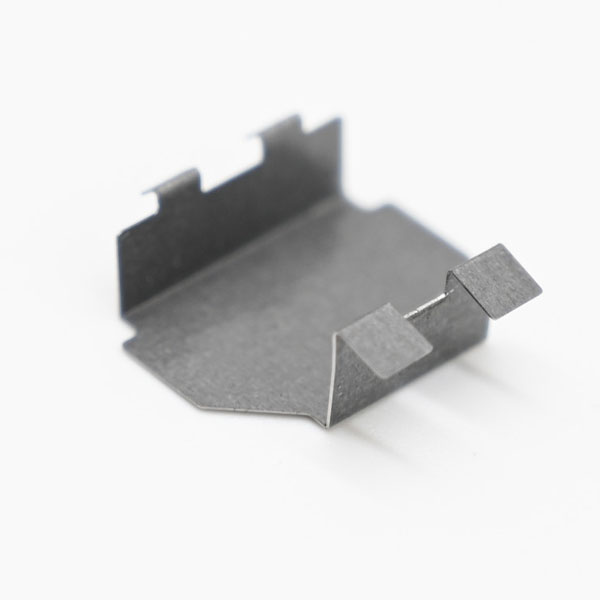
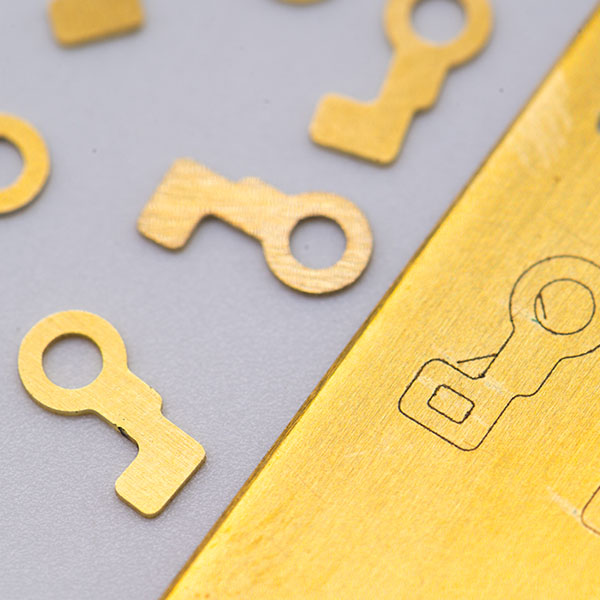
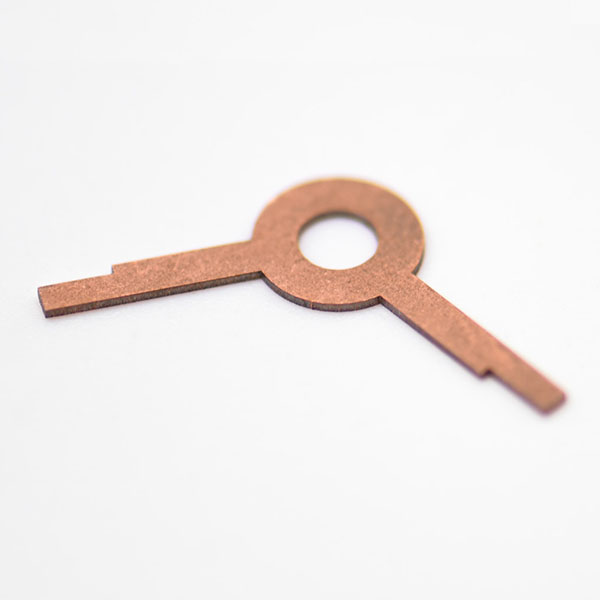
Our latest investment into laser cutting and rapid-precision metal forming adds a whole new dimension to our current NPI offering, with a range of capabilities that give you speed, flexibility and accuracy in one controlled environment, and that is Brandauer’s Special Products Division (SPD).
Our recent investment in precision laser cutting and metal forming brings a whole new offering from Brandauer to you. It allows us to work closely with you even earlier in your project life cycle. From the very beginnings of your product idea, we can design, test and provide you with components with a fast turnaround (from 48 hours from original RFQ) without having to commit to costly tooling expenses early on. Our capabilities for this service align closely with our capabilities for the high-volume stamping runs. This means it’ll be a simple process for us both to take your idea into high-volume production.
Once your prototype has been validated, then we can move on to Design for Manufacture (DFM) principles to ensure the designs are not only functional but built to be efficiently manufactured at scale. This critical process allows us to identify bottlenecks, suggest design tweaks that ultimately improve output, material utilisation and cycle times.

When it comes to transitioning to full-scale production, we collaborate with you on the design of the tooling and selection of the manufacturing method that best supports your goals. Whether that’s sticking with laser cutting or a basic, single-stage tool for low-to-medium volumes, or transitioning to precision progression tooling for higher-volume output, our engineering and tooling teams ensure every detail is designed flexibly with throughput, quality and consistency front of mind.
With this start-to-finish route, Brandauer offers a truly one-of-a-kind service. From concept and toolmaking through to full-scale production, it is all done under one roof by one team. There is no reliance on external parties to fulfil the orders or prototype the parts. All of this, backed by over 160 years of engineering expertise!
An example of this is our recent contract with LORD International, a cutting-edge razor blade company that required us to bring their new product offerings to a high-volume, automated production line.
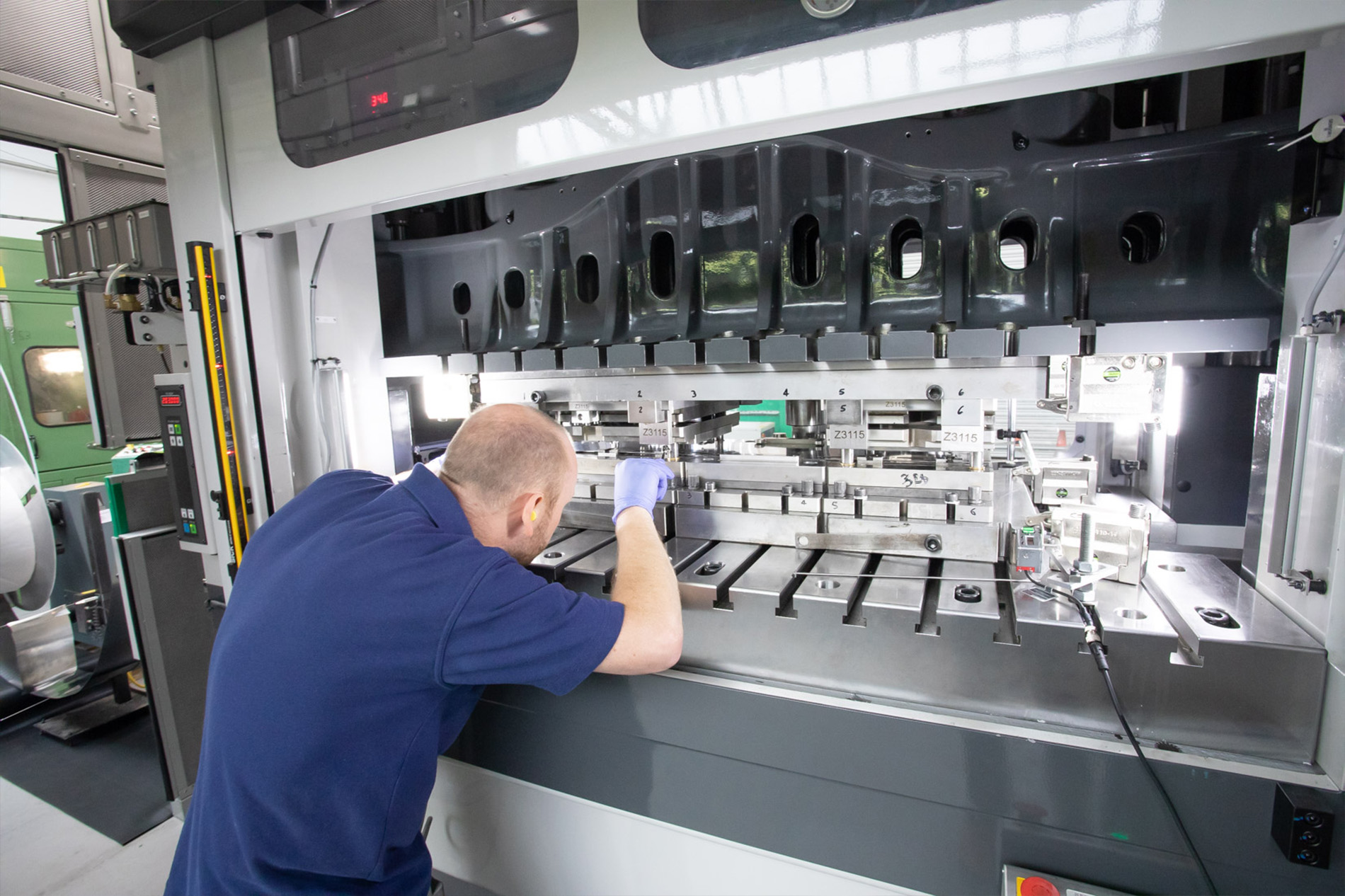
As with any successful NPI project, early-stage collaboration was vital. Brandauer engineers worked directly with LORD’s technical team to not only validate the part’s design but to shape the tool design and determine the best-fit manufacturing process, all aimed at maximising output and long-term reliability. A four-module progression tool was developed in-house to support volumes of up to 500 frames per minute. You can read more about the LORD international export contract in this case study.
Conclusion
New Product Introduction is much more than a formality. It’s the foundation to enable efficient, innovative and scalable manufacturing across both parties. For Brandauer, NPI is woven into every part of our service offering.
This helps us deliver not only quality components but meaningful, long-term partnerships with customers. From the initial enquiry to the handover at full-scale production, a structured, gateway-driven approach is there to ensure value-driven work is being conducted. Whether you’re a start-up looking for low risk prototyping, or an OEM scaling up to millions of parts per month, NPI is the foundation to ensure a smooth and quick delivery of your product. Ensuring reduced scrap, tighter lead times, shared accountability, and the flexibility of services are all there for you to take advantage of.
Follow us on LinkedIn for further information and more interesting articles like this.